Apex Ability Timing: Pair an Effect With an Action
An available ability is not automatically a reason to press it. Read its current function, identify the squad action it should support and check whether teammates can use the opportunity.
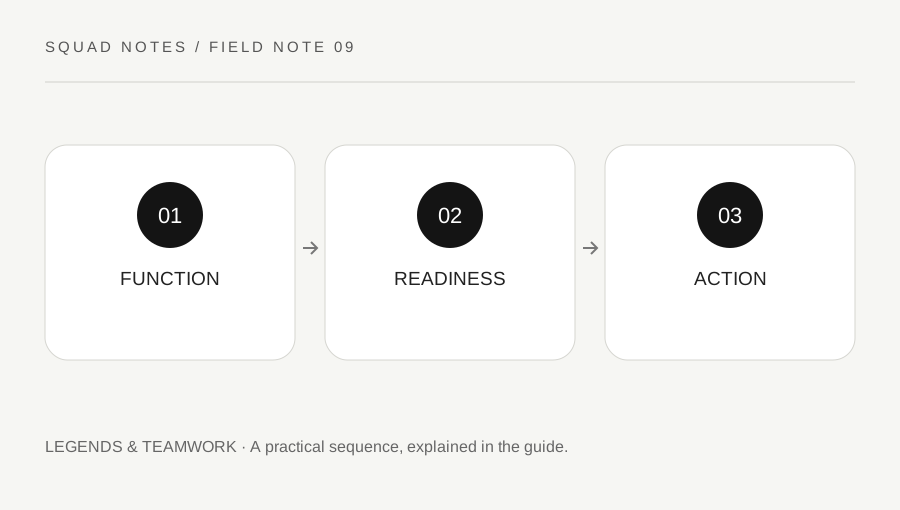
Original explanatory diagram. Examples illustrate a method or decision; they are not claims of personal testing.
Describe the current function in plain language
Read the Legend's current in-game ability description and the official ability guide. Write what the effect actually provides: information, movement, pressure, protection or another supported function. Avoid relying on an old cooldown or interaction remembered from a previous update.
Separate an effect's potential from its present value. Information is useful when someone can act on it; movement is useful when the destination is viable; protection is useful when it covers the angle or moment that matters. A familiar button can produce little benefit if the intended purpose is unclear.
This page develops timing after the site's beginner role guide. It does not rank every Legend or claim one permanent composition is strongest. The same character can support different actions depending on position, mode, teammates and the information available.
Check the squad’s readiness
Before spending a major resource, identify whether teammates can move, see the relevant space or follow the plan. A player still recovering behind another building may not benefit from an opening created far ahead. Use a short practical call rather than assuming readiness from proximity on the map.
Check your own return route and the cost of losing the ability's availability. An effect used to enter may no longer be available to leave, depending on its current behavior. Read the actual cooldown and interaction in game instead of applying a generic promise.
For a worked example, a squad wants to cross a dangerous gap. They first identify the destination cover and confirm everyone is ready, then use the relevant supported effect. The ability is part of a movement plan, not a replacement for selecting a reachable destination.
Connect the use to a visible trigger
Choose a trigger tied to observation: the squad is ready to cross, an opponent commits to a lane or a teammate reaches the planned angle. Avoid a trigger based only on impatience, such as using the effect because it has been ready for a while.
Keep the plan flexible. If new information removes the opportunity, hold or redirect the ability when possible. Do not complete a previously announced action solely because you began explaining it. A changed enemy position may make the original destination worse.
Observe the actual effect before following. Some abilities can be interrupted, blocked or interacted with according to current mechanics. This article does not invent a universal counter list. Use official descriptions and practice to learn the particular Legend's behavior, and keep unsupported assumptions out of match calls.
Review the result without using cooldown efficiency alone
An ability used frequently is not necessarily used effectively. After an encounter, ask what action it enabled and whether the squad took that action. A saved ability can be appropriate if no useful opening appeared, while an unused opportunity can reveal a readiness or communication problem.
Write one specific review: effect arrived too early, destination was unclear, teammate could not follow or the observed information was not communicated. Choose the next practice task from that cause rather than changing Legend after every loss.
Finish with a short sequence you can explain: function, readiness, trigger and follow-up. Recheck mechanics after updates that affect the character or mode. The goal is making the ability part of a shared decision, so its value comes from what it changes in the encounter rather than from the visual drama of using it whenever the icon becomes available.
A practical checklist
Choices are saved in this browser. Reset them here or clear this site’s browser storage.
Questions that come up
Should I use an ability as soon as it is ready?
Only if the situation provides a useful purpose. Availability alone does not establish value, and timing can matter more than frequency.
Can old cooldown numbers be trusted after an update?
Recheck current descriptions and official notes. This guide deliberately avoids permanent numerical promises.
Does a failed follow-up mean the Legend is bad?
Not necessarily. Readiness, destination and communication can explain the failure. Review those before drawing a broader conclusion.
References & scope
Background references checked on 18 October 2026. Worked examples and diagrams are original teaching material.