Apex Building Entries: Clear One Angle Without Exposing Three
Entering a building changes the angles that can see you and the routes your squad can support. Use a small entry plan rather than treating the nearest doorway as the automatic way forward.
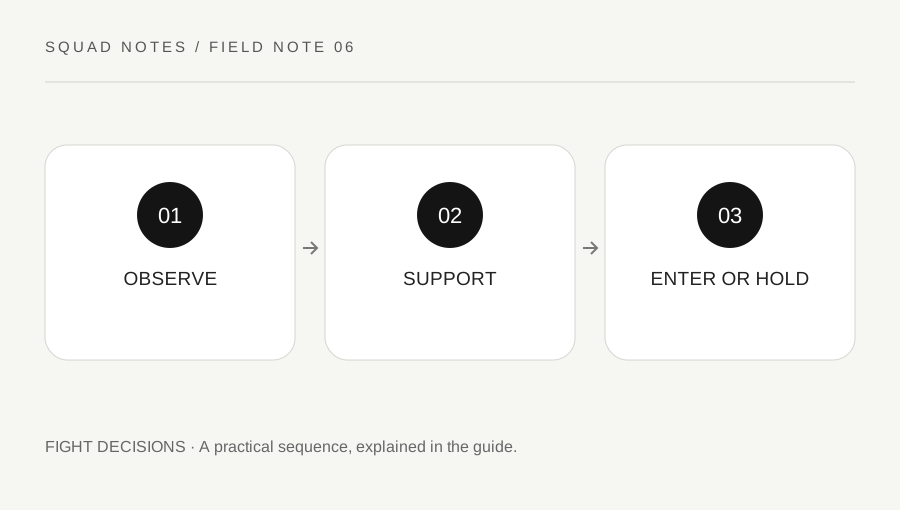
Original explanatory diagram. Examples illustrate a method or decision; they are not claims of personal testing.
Inspect the approach from usable cover
Identify visible doors, windows, height changes and any routes that might let opponents move behind your squad. You do not need a complete floor plan to notice that an entry exposes more than one direction. Keep unknown rooms and unseen stairs explicitly unknown.
Check whether your current cover allows you to observe without committing. A doorway can frame an opponent clearly while also exposing the player who stands in it. Do not remain centered in an opening merely because it offers the easiest view.
This guide uses general decision principles rather than a permanent map-specific route. Building layouts, destructible elements and abilities can vary by location and update. Inspect the actual match environment and use supported movement, not an assumed old diagram or an exploit that bypasses intended geometry.
Give the entry a useful squad purpose
Decide whether the aim is entering, pressuring an exit, holding an angle or moving past the building. Those purposes need different positioning. A teammate covering a doorway should know whether you intend to cross it or simply gather information.
Avoid stacking every player in the same narrow opening. A shared bottleneck can restrict movement and make the squad vulnerable to one source of pressure. At the same time, spreading so far that nobody can support an entry creates a different problem. Seek useful supporting angles that remain connected.
For a worked example, one player watches a visible exit from cover while another checks whether the intended entrance is safe. If the third player is still healing elsewhere, the squad delays the commitment rather than pretending that three players are ready because all three are alive.
Clear a manageable slice of information
Move only as far as needed to inspect the next relevant angle while keeping a return route. Do not assume that seeing one empty corner proves the whole room clear. Doors, stairs and windows can change which directions matter as you move.
Use a clear call about the visible area rather than “all clear” when only one section was checked. If an ability or grenade is used to create space, connect it to an actual movement plan and account for teammates. An effect without a follow-up can reveal the squad's intention without improving its position.
If the entry becomes uncertain, holding or disengaging remains a legitimate option. A plan is not a promise to enter regardless of new evidence. Update when an opponent appears on another floor or when the supporting angle no longer protects the route.
Review the position after crossing
Once inside, identify the next cover and exit rather than stopping in the threshold. Check whether teammates can follow without crossing the same exposed lane alone. A successful first step can still leave the squad split across an awkward doorway.
Afterward, review one specific exposure: which angle damaged you, whether it had been considered and whether the entry purpose justified the risk. If aim was fine but the squad could not trade pressure, the next practice target may be support positioning rather than weapon mechanics.
Finish with a simple entry checklist that fits your communication style: visible threats, support ready, next cover and exit. These are prompts for observation, not a guarantee against hidden opponents. A disciplined entry can still meet an unexpected threat, but it gives your squad a clearer basis for adapting than an unannounced rush through the closest opening.
A practical checklist
Choices are saved in this browser. Reset them here or clear this site’s browser storage.
Questions that come up
Does one empty corner mean the building is clear?
No. Your statement should match the area actually observed. Other rooms, floors and approaches can remain unknown.
Must a squad enter once the push is called?
No. New information can justify holding or disengaging. Update the plan rather than treating the first call as irreversible.
Is a doorway always bad cover?
Its value depends on the actual angles and task. Avoid assuming that an opening is safe simply because it provides a clear view.
References & scope
Background references checked on 18 October 2026. Worked examples and diagrams are original teaching material.