Apex Grenades: Choose the Space You Want to Change
A grenade is more useful when it has a clear purpose. Identify the cover, route or timing window you want to affect, then connect the throw to a squad action instead of judging it only by damage.
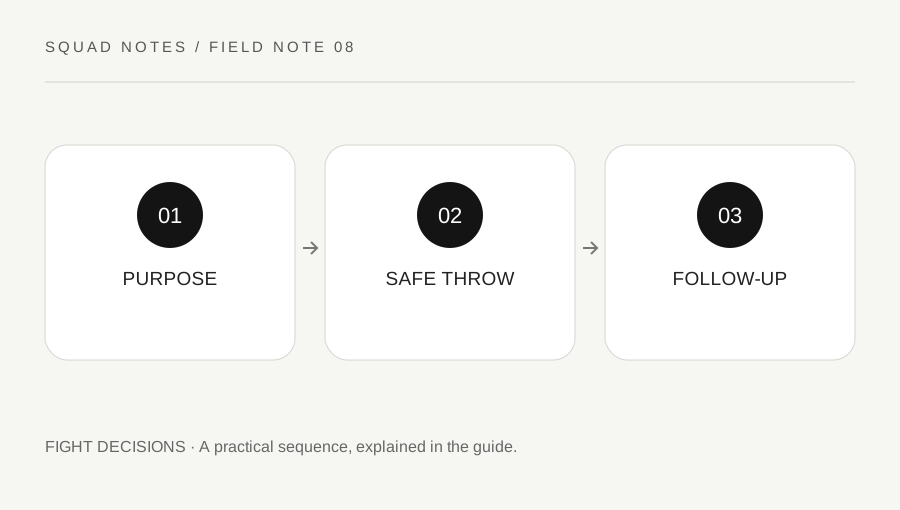
Original explanatory diagram. Examples illustrate a method or decision; they are not claims of personal testing.
Name the intended change
A grenade can pressure a position, discourage a route or create time for another action. State which result matters in the current encounter. “Make that corner difficult to hold while we cross” gives the throw a different purpose from “try to finish an exposed opponent.”
The official beginner guide describes ordnance as a way to pressure cover or create an opportunity. Exact behavior varies by grenade type, mode, abilities and updates, so read the current item description and observe its effect in supported practice. This article does not prescribe permanent damage values or fuse timings.
Do not assume that carrying more grenades automatically improves the plan. Inventory space and the rest of the loadout still matter, as discussed in the site's inventory guide. Here the focus is whether the next use changes a useful part of the fight.
Prepare the throw without losing awareness
Use cover while selecting and aiming the item, and account for nearby geometry. A doorway, low roof or unexpected obstacle can change the path. Practice supported throws in the Firing Range where possible rather than relying on an old lineup that may no longer match the map.
Keep teammates informed when they are about to move through the affected space. A throw with a useful destination can still disrupt your own squad's timing if nobody knows what is happening. Avoid a lengthy explanation during pressure; name the location and intended follow-up.
For a worked example, the squad wants to cross from one cover piece to another. A player pressures the opponent's firing corner, then calls the crossing. The throw is judged partly by whether the crossing became more manageable, not solely by whether a large damage number appeared.
Watch the response rather than assuming success
An opponent may move, remain, change angle or use an ability that alters the situation. Observe what actually happened. A grenade thrown toward a corner does not prove the corner is empty or safe to enter.
If the target position changes, update the squad's plan instead of rushing into the original destination automatically. The opening may be shorter or different from what you expected. Keep a return route and supporting angle if the next action involves crossing exposed space.
A missed or ineffective throw can still supply useful review information: the arc hit an obstacle, the target had another exit or the squad could not follow in time. Record the specific cause. Repeating the same throw faster without understanding its effect is unlikely to answer whether the chosen purpose was realistic.
Review purpose, placement and follow-up separately
Use three questions after the encounter. Was the intended change useful? Did the item reach the intended area? Did the squad act during the resulting opportunity? These separate strategic choice, execution and coordination.
Imagine a throw that pressures an opponent successfully while the squad is still recovering far behind cover. The placement can be good but the timing unhelpful. Another throw may deal no visible damage yet prevent a route long enough for a safer retreat. Outcome needs context.
Finish by selecting one practice target, such as clearing a nearby obstacle or agreeing on a crossing call. Use only supported game mechanics and current map geometry. A useful ordnance habit connects the item to space and time, giving the squad a plan it can observe and adapt rather than a vague hope that an explosion will solve the entire fight.
A practical checklist
Choices are saved in this browser. Reset them here or clear this site’s browser storage.
Questions that come up
Does zero visible damage mean the grenade was useless?
Not necessarily. It may have altered movement or created time. Judge it against the stated purpose and actual follow-up.
Can I assume the corner is clear after a throw?
No. Observe the response and retain uncertainty. Opponents can remain, move or use abilities.
Does this page provide permanent grenade timings?
No. Read current in-game descriptions and official updates, then verify supported behavior in practice.
References & scope
Background references checked on 18 October 2026. Worked examples and diagrams are original teaching material.